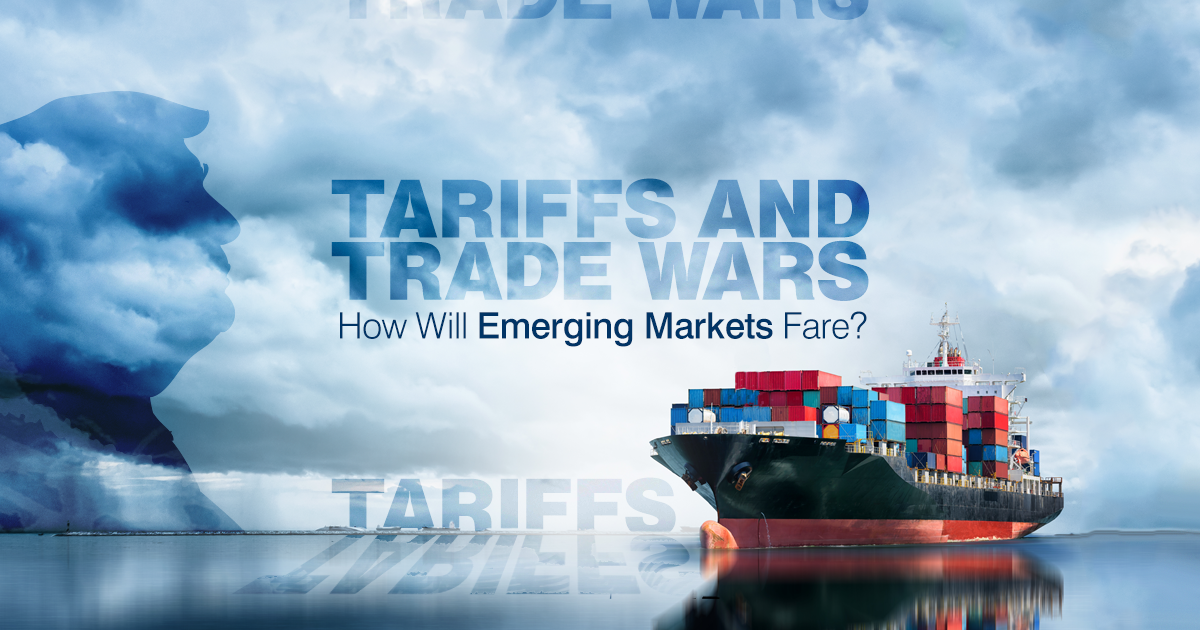
The United States Trade, Tariffs And Sanctions.

written by Hubert Odias

In 2018 President Donald Trump had blasted his trumpet on trade, tariffs and sanctions. Since then, many industrial countries trading with the United States have been on edge.  He has imposed high tariffs on some and sanctions on others. But the escalation of this trade dispute could well be counterproductive.

Tariffs are used to limit imports by increasing the cost of merchandise and services that are bought from overseas, thereby making them less likable to local consumers.

Two types of tariffs exist: ad valorem tax, which is a percentage of the value of the imported goods; the other one is a tax levied based on a set fee for the weight or the number of items. The two most popular items that are being taxed in this current trade dispute are aluminum and steel.

Some of the countries being impacted by the U.S. tariffs or sanctions include Russia, Iran, Turkey, Mexico, Canada and the European Union to name a few. But sanctions imposed on Iran are toxic and vindictive; the tariffs imposed on Turkey are literally political; those imposed on China, although politically motivated, are more relevant. The fact is that China has a big trading surplus with the United States, and it fails to respect intellectual property rights.

In other words, tariffs are by their very nature a gamble.  They have their pluses and minuses.  The ultimate benefit of tariffs is to reduce imports and increase the demand for domestic goods.   In this case, tariffs are a win-win for domestic businesses from reduced competition and increased federal tax revenue.

The disadvantages of tariffs result in similar imported goods being more expensive in the market than domestic ones.  But the worst of all is their counterproductive effects; countries being under the weight of tariffs often retaliate. 

Unlike a wrestling match where one wrestler got pinned down and the other wins, the imposition of tariffs on countries results in a no-win situation. The outcome is simply a draw with some economic bruises. Sanctions, on the other hand, are punitive. But collective retaliation of countries being pinned down by America could eventually lead to its demise.

Several major countries are already in the process of opting out of the U.S. dollar as the world exchange currency, citing concerns that further use of the U.S. dollar would add more fuel to the American hegemonic expansionism and militarism around the world.  Those countries are, for example, the BRICs (Brazil, Russia, India and China) Turkey, Iran, Venezuela and likely some of U.S. own allies.

Tariffs are a tit-for-tat game for commercial leverage.  Likely “the sword of Damocles” is hanging above Trump’s head to show him the problematic nature of his international trading sensation. 

If the United States was willing to do away with all those tariffs and sanctions, it would have to choose preferably the path of a constructive dialogue with its trading partners. Then, a fair resolution to the trade dispute would have been achieved; America and all the countries involved would have managed to pull off colossal benefits.  But if no breakthrough is reached, then what?
Hubert Odias, Freelance writer

Trump officially recognized Israel’s sovereignty over Golan Heights

Written by Hubert Odias

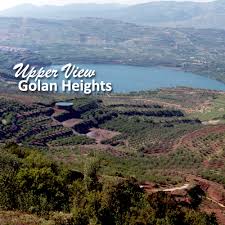
Since the French colonization of Syria, Golan Heights has been a part of that country.  Now President Donald Trump has officially recognized Israel’s annexation of that land.  Damn!  What the heck is going on?

The history of the Golan Heights is self-evident.  At the end of the First World War, the French who colonized Syria back then were given authority over the territory.  In 1941, Golan was formally integrated into the Syrian mainland. 

The Israeli-Arab 6-day war in 1967 has changed all that.  The Golan plateau was seized and has been since then under the Israeli occupation.  Now Trump has officially recognized Israel’s sovereignty over the Golan Heights. 

Israel is, so to speak, a big country trapped in a small land. One way out is via expansionism at any cost. With that in mind, it encroaches deep on neighboring countries: Egypt, Jordan, Syria and Lebanon.  Israel has signed a peace treaty with Egypt and Jordan.  So Mount Sinai was returned to Egypt and Jordan regained sovereignty over Baqoura and Zofar/AlGhamr.

 “The message to people out there…If you have military power, and you have U.S. support, go ahead and occupy other people’s land by force.” Khalil Jahshan, Arab Center Washington, DC.

When Israel was created in 1948, the United Nations established a set boundary lines. But the leaders of that country have greater ambitions.  So the plan for Greater Israel was conceived.  It comprises the entire Syria, Lebanon and Iraq.  It also extends from the Mediterranean to the Red Sea and to the Persian Gulf with chunks of Egypt and Saudi Arabia. 

By the way, Israel is a very powerful country.  Shortly after its creation, it fought war after war and won every single one of them.  Israel ranks the 8th most powerful nation in the world.  With all its military might, it dominates the entire Middle East.  According to a source, Israel has a higher standard of living than its Arab neighbors and it is also comparable to highly developed countries.

With all that power comes the abuse of it.  It is a proven fact throughout history.  For example, Adolf Hitler of Germany, Emperor Hirohito of Japan, Mussolini of Italy and dictators around the globe were notorious in their quest to forcefully conquer and to dominate.  To a certain degree, Binyamin Netanyahu is leading Israel in this direction.

With the blind support of the United States, Binyamin Netanyahu is fearless in its land and military conquest.  He and Trump are in cohoots in the official recognition of Israel’s sovereignty over the Golan Heights. 

Trump’s recent Golan Heights decree serves well the interests of Netanyahu weeks prior to the Israeli election. It is also meant to deflect the Jewish public opinion from Netanyahu’s a;;eged corruption charges.  In short, it is all about winning an election at the expense of a stolen land.

Like Netanyahu, Trump is allegedly marred with challenges and controversies.  Trump uses the Golan’s annexation to perfect his Jewish legacy and to capture their votes in the 2020 U.S. presidential election.  By so doing, he adds fuel to an already volatile Middle East, and he also turns the Arab world to Russia. 

Historically, Golan Heights remains a Syrian territory regardless of who robbed Syria of it.  The fable “The Wolf And The Lamb” can be related to Israel and Syria.  The United States partiality toward Israel is a license issued to the Jewish State to sabotage, to steal land and to violate neighboring airspace to provoke or to attack as it pleases.  Under Trump, it’s absolute Jewish usurpation. 

The Israeli annexation of the Golan Heights is a blatant act of robbery.  The United Nations should have a say in this.  In case the United Nations is also partial toward Israel, a credible International Court, if there exists one, should be able to bring the Golan Heights issue to a fair resolution.  For it’s time that the United States stops acting unilaterally in world affairs as if it were the United Nations itself. 

Look! Soviet President Nikita Khrushchev gave Crimea Peninsula to Ukraine in 1954. President Vladimir Putin retook it from Ukraine in 2014, and Russia was sanctioned. In all fairness, how much more the United States and Israel should be sanctioned for stealing the Golan Heights from Syria? What an imperialistic act!

It goes without saying that if a country is Israel or a close ally of the United States, that country is bound by a set of favorable rules that govern it.  On the other hand, if a country is perceived to be an enemy, it is doomed to fall prey to the imperial world predator. 

Such is the current situation of the Golan Heights today.  Below the surface, captive Golan is languishing and erupting tears of lava while awaiting its freedom and its return to the Arab Republic of Syria.    

Hubert Odias, Freelance writer.

The Assassination Of Jamal Khashoggi Coupled With Attacks On Journalists.

Written by Hubert Odias

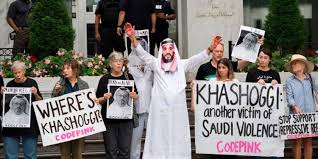
Since the inception of the press, journalism has been under attacks, and journalists have been killed for the work in which they are involved. Jamal Khashoggi is the most current murder victim. His assassination is viewed as a revenge killing for his critique of the Saudi Monarchy and also as an attack on journalism as a profession.

In a world of democracy, journalism ensures the exercise of checks and balances among branches of the government. It is also the pillar of our democracy. Sadly, as a means of silencing journalists, they often fall victims to assassinations for their work.

As UNESCO reports, between 2006 and 2016, approximately 930 journalists were killed because of their work. Of this statistic, the terror attack of January 7, 2015 on Charlie Hebdo, the French Weekly and satirical cartoons, resulted in the death of 9 journalists and 3 others. Most recently, the world witnesses the brutal assassination of Khashoggi.

Khashoggi who was a Saudi-born Washington Post columnist was allegedly assassinated and dismembered on October 2, 2018 inside the Saudi embassy in Istanbul, Turkey. Last fall, his murder produced a backlash. It was, so to speak, the crime of the century.

The world was in a state of shock; most world leaders became vehemently critical of the Saudi monarchy for its assumed role in the gruesome murder of the journalist. People in the media around the world have been protesting and demanding justice for Khashoggi.

The version of the Saudis in Khashoggi’s assassination was contradictory. At first, they were in denial. Then, as evidence coming from the Turkish government, the CIA (Central Intelligence Agency) and the media was mounting, they cracked. They took responsibility for the murder of the journalist, but they laid the blame on low-level rogue members of the royal government.

In the case of Khashoggi, he was a dissident and a critic of Saudi Prince Mohammed Bin Salman. His only guilt was his denunciation of corruption, human rights abuses and the barbaric system of the Saudi Kingdom. Let’s emphasize that Saudi Arabia which is governed by Sharia laws is very autocratic. No freedom of anything!

But with President Donald Trump repeatedly depicting the press as the enemy of the people, he, ironically, adds fuel to the burning fire. His fiery statement against the press feeds into the mind of those having an evil intent to harm journalists. In other words, has justice ever been served for all the carnage perpetrated on journalists?

Although the United Nations declares the end of impunity for the murder of journalists, it is reported that 9 out of 10 of those who kill journalists go unpunished. The fact is that, in the absence of the due process, the impunity goes unabated, justice almost never served and those who kill journalists are wreaking havoc everywhere. In view of all this, an anarchic society would be likely to develop.

It is evident that no real society can function without the media. Otherwise, it would become an elite-style society that engages in the manipulation of the mass with a wide cultural divide, and where its choice, desire and conduct are being dictated or imposed by the powerful.

Ah! Let’s pretend that such a society existed. But how about the First Amendment, which is the freedom of speech to which every citizen is entitled? Also, how about the role of the media in every society, which is to guide, to inform, to educate and to entertain? In any society, there can be no substitution to the media and no attacks that are strong enough to crumble their foundation.

As the world mourns the assassination of Khashoggi, one can’t help wondering about justice for him. However unlikely justice may seem, the International Court has a job to do. On the other hand, let’s pause and reflect for a moment.

Is the Saudi Monarchy so much above the law that it is exempt from being held accountable for its own alleged crime? Does Petro-dollar supersede moral and human value? Is it impunity as always? If it is the case, the tale, The Wolf and the Lamb,” is no longer a fable, but a fact in relation to Khashoggi’s killing.

Whatever befalls from the assassination of Khashoggi and that of all journalists around the world, every drop of blood they shed for their work adds a new dimension to the doctrine of journalism and to the conviction of all journalists. The legacy of Khashoggi lives on.

“Release my arm! What do you think you are doing? Traitor, we’ll deal with you.” These were Jamal Khashoggi’s final words as he was being tortured and killed at the Saudi embassy, according to Haaretz, a Turkish newspaper.

Note

The author of this blog, Hubert Odias, thanks everyone for taking the time to read its content.  Also, please write and leave comments.  Your suggestions in the form of a constructive criticism or words of encouragement are welcome.  Thank you.