
Hubert Odias, Freelance Writer.
Haiti, a nation that changed the course of history, is now in a serious crisis.
In the 1700s, Haiti was a flourishing and prosperous colony. Regrettably, something has gone wrong. Today it is everything contrary to its glorious past, and the facts on the ground are self-evident. But drawing a parallel between Haiti’s past and present would be a monumental effort because of its rich and complex history. So let’s delve into the story.
Initially, the Spanish had total control of the island of Hispaniola. But the French envied the island, pirated Spanish ships, and seized their cargoes, which led to a conflict that resulted in a 9-year war.
Ultimately, the Spanish conceded, and the two colonists agreed to split the island via the 1697 treaty of Ryswick, which allocated the western one-third of the island to the French. From then on, Saint-Domingue (Haiti) had officially become a French colony.
“By the 1760s, Saint Domingue had become the most profitable colony in the Americas. By the time of the French Revolution, the colony produced more than half of all the coffee worldwide. Saint-Domingue was also producing 40 percent of the sugar for France and Britain and accounted for 40 percent of France’s foreign trade at a time when France was the dominant economy of Europe.”
Suddenly, war broke out. It was the 1791 Haitian Revolution. The slaves, defiant, had revolted. Battle-hardened, they fought chanting: “Life or death, and death to the French.” After they won the bloody battle of Vertieres on Nov. 18, 1803, the French conceded defeat, the war ended, and a free Haiti was born.
“One of the most notable aspects of Haitian history is that the nation is the only one to have emerged as the result of a successful slave rebellion. From 1791 through 1804, enslaved people and their allies in Saint-Domingue fought a protracted revolution to win their independence from France.”
Haitian warriors crushed Napoleon’s strong army. Henceforth, Haiti carries the torch of freedom and the banner of the liberation movement. As intrepid fighters, Haitians contributed immensely to the freedom struggle of other countries.
For example, they fought in Savanah, Georgia during the US Independence War. Haiti also helped modern-day northwest Brazil, Guyana, Venezuela, Ecuador, Colombia, Panama, northern Peru, Costa Rica, Nicaragua, and Bolivia to obtain their independence.
“Trinidad and Tobago, as well as the rest of the Caribbean, owes Haiti a big debt of gratitude for their contribution to our own Emancipation.”
Haiti helped countries in unimaginable ways. In the early 1800s, Pres. Alexandre Petion provided Simon Bolivar with Haitian sailors, soldiers and ammunition. Then, in 1822, Pres. Jean-Pierre Boyer helped the Greeks in their struggle against colonialism by sending them a ship with war supplies and 100 Haitian volunteers. Haitian troops also came to the rescue of Korea in the 1950-1953 war.
During the Second World War, Haiti accomplished a goodwill gesture on behalf of the Jewish people. Haiti took a stand against Nazi Germany by issuing life-saving visas to Jewish refugees. Some of those refugees remained in Haiti where their descendants still live. See the photos below.
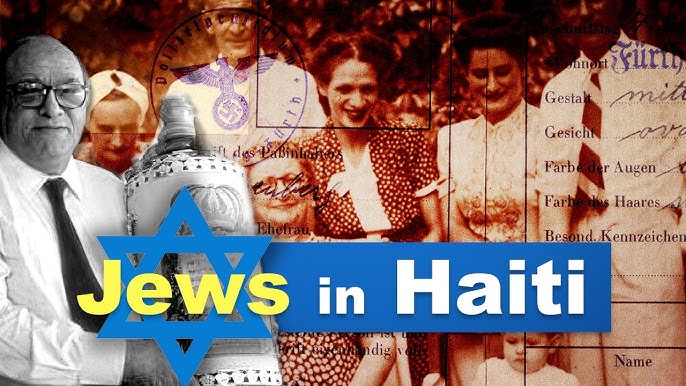
The Haitian revolution was a remarkable success, but what’s on everyone’s mind is how this brave nation could incur such a massive decline in wealth and power.
The reason for the decline goes way back, and it is mainly due to the absence of leadership. For example, Toussaint Louverture, the architect of the Haitian Revolution, was apprehended and deported to a French dungeon where he died in 1803. He was the one who had the know-how and the authority to establish law and order and write a constitution that would move the country democratically forward.
Unfortunately, right after the independence, political discord and greed for power triggered such a leadership crisis that a vicious cycle of corruption, power struggle, and violence drove political leaders to turn on each other. So Jean-Jacques Dessalines, the father of the nation, was ambushed and killed in 1806. King Henry Christophe allegedly killed Capois-La-Mort, an independence war icon.
Presently, some of the crucial problems Haiti faces are the following: insecurity, poverty, overpopulation, high unemployment, systemic corruption, and internal and external exploitation, etc. Out of all those problems, gang crimes are the worst scourge that ever befell the country. Also, the most shocking event in 2021 was the assassination of Pres. Jovenel Moise who was democrately elected. After his death, the government has gone from bad to worse.
What ensued is lawlessness that reigns supreme in most parts of the country. The gang has become an institution to which belong people from all walks of life, including elected and non-elected officials, the oligarchs, and foot soldiers on the street doing the kidnappings, the rapings, and the killings, etc. By this, it is clear that the gang has infiltrated every fiber of the Haitian society.
Day by day, the situation in Haiti is getting direr and direr with the escalation of the violence. The United Nations reports that 4,451 killings occurred in 2023, and the gangsters have displaced 580,000 people. They also wreaked havoc, and damaged or destroyed infrastructures and everything on their paths.
The gangs are so well armed and rooted in the country that the Haitian government seems powerless to eradicate them. Reestablishing law and order in Haiti now is a one-million-dollar question. In the meantime, the population is at bay and suffering miserably while those criminals are holding the country hostage.
Suppose we intersect the two lines between Haiti’s past and present to reconcile the critical current situation of the country with its glorious past. In that case, we must return the clock to the late 1700s and 1800s to remake history and be proud Haitians again.
Source: Wikipedia
 Hubert Odias