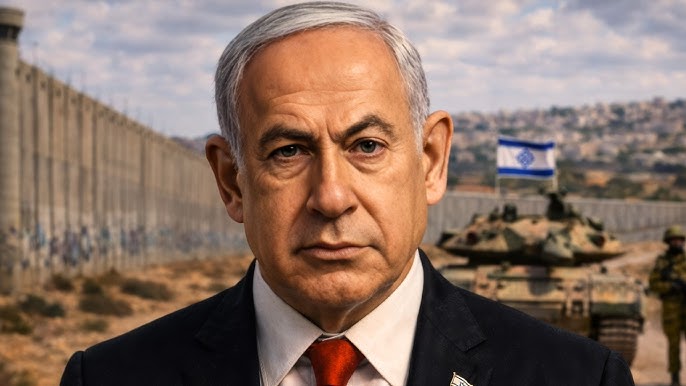
Netanyahu is Israel’s longest-serving Prime Minister, with multiple terms since 1996. His political career is defined by support for a free-market economy, a militant ideology, and ongoing legal controversies.
Since its inception in 1948, Israel has had leaders whose conviction and devotion transformed that small country into a powerhouse. In a modern society, with a growing economy and advanced technology, Netanyahu often prides himself on his country’s achievements and his ongoing efforts in that endeavor.
Despite its achievements, Israel faces constant threats of war, drawing on its history and proximity to perceived hostile Arab nations. Many observers see Netanyahu as central to framing and responding to this hostility.
For example, Netanyahu’s primary adversaries are Iran, Hamas, and Hezbollah. Some commentators suggest he is fixated on security and may believe that by initiating conflict with weaker adversaries and prevailing, he gains recognition as Mr. Security and a steadfast protector of Israel—a tactic that might consolidate his power and prolong his time in office.
Netanyahu often advocates assertive security policies. Critics argue that in peacetime, he encourages military action against groups like Hamas or Hezbollah and supports operations beyond Israel’s borders. He is also opposed to the creation of a Palestinian State and continues the expansion of Jewish settlements into contested territories, a policy described by opponents as illegal.
In the last two decades, Netanyahu urged several U.S. presidents to join him in efforts to address the Iranian nuclear program. None of the US leaders agreed except President Donald Trump. As a result, wars in June 2025 and February 2026 occurred, and their aftermaths are being felt on a global scale.
Like some previous Israeli leaders, Netanyahu has been associated by commentators with the idea of a “Greater Israel” extending its borders, which remains a matter of debate. Meanwhile, Palestinians and others in the region call for self-determination and the return of disputed lands.
Armed with consistent US political and military support, Netanyahu has pursued policies he considers vital to Israel’s security and regional standing. He opposed the 1993 Oslo Peace Accord and the 2018 Joint Comprehensive Plan of Action. Supporters credit his focus on security as necessary, while critics argue that such moves sideline peace efforts and sometimes distract from domestic controversies.
Netanyahu’s controversies and legal challenges persist during his time as prime minister. Notably, he has been indicted on bribery, fraud, and breach-of-trust charges. His 2023 judicial overhaul proposal triggered widespread protests and divided the nation.
Following the October 2023 war with Hamas and subsequent military actions, The New York Times reported that prosecutors at the International Criminal Court (ICC) requested arrest warrants for Netanyahu for alleged war crimes. Supporters argue the actions were taken for national defense, while critics cite the high Palestinian casualty toll.
Some observers hold Netanyahu responsible for casualties in recent conflicts with Iran. Opponents accuse him of war crimes and argue for accountability, while supporters contend his actions aim to protect Israel. The debate continues about how international norms should apply in these conflicts.
On the other hand, Netanyahu has achieved some economic successes in Israel. For example, he shifted Israel from a quasi-socialist to a free-market economy. He also significantly increased GDP, reducing the debt-to-GDP ratio to one of the lowest in the world and achieving a record-high level of investment. He, then, pushed through massive privatization of government-owned companies and reduced tax rates as a growth incentive.
In the field of technology, Netanyahu strongly supported the high-tech sector, fostering an environment that made Israel a global cyber and innovation powerhouse. He also pushed forward the development of offshore natural gas fields despite significant political opposition, which transformed Israel from a resource-poor country into an energy exporter.
During Netanyahu’s tenure as prime minister, he has overseen significant economic achievements and is also under legal scrutiny for fraud and allegations of war crimes. Some urge caution before drawing conclusions, advocating that history will ultimately judge his legacy.
Hubert Odias, Freelance Writer.
Source: Britannica.

