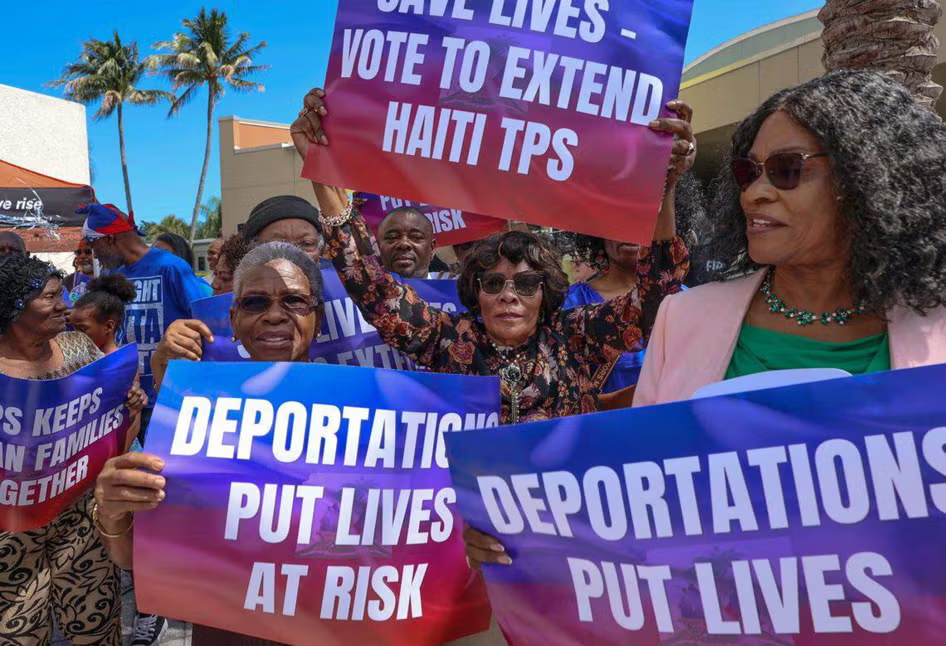
Despite the ongoing gang violence in Haiti, the U.S. Department of Homeland Security has determined that Haiti no longer meets the conditions for the designation of Temporary Protected Status (TPS). It is a decision that affects both Haitians and the United States.
Between late July and August 2026, the U.S. Supreme Court has terminated the temporary legal status of some 350 thousand Haitians. Instantly, a state of panic ensued, and the Haitian community braces for the worst while using its countermeasure plan at least attempting to maintain the status quo. Meanwhile, the U.S. industries that depend on a major Haitian workforce for their productions scramble to manage the sudden staff turnover.
The terminimation of TPS produces major repercussions for the Haitians. Without theTPS, they become automatically stateless, jobless, and vulnerable to immigration enforcement. The loss of their legal status also means family separation, economic devastation, deportation risks, and no more driver’s licenses, etc. In short, former HaitianTPS holders now become persona non grata in a country they once called home. Without any alternative relief or a way out, they are, as it is said, “between a rock and a hard place.” The unstated ultimatum is clear: self-deport or throwing oneself on ICE’s mercy.
The TPS ruling has its negative impact on the United States, as well. It causes severe labor shortages in U.S. industries like healthcare and hospitality, while forcing migrants back to a violent country. U.S. businesses, particularly nursing homes, assisted living facilities, agriculture, construction, and hospitality will eventually face crippling staff losses.
The United States. will also lose billions in consumer spending power, and millions in federal, state, and local tax revenue that the Haitian workforce would have contributed annually. The whole situation is a fiasco. Local service providers, schools, and care facilities experience sudden drops in enrollment or care continuity for vulnerable populations. As a last resort, will the United States send for foreign workers to fill the void left by the Haitians?
The end of TPS places former beneficiaries in limbo. Now the question is: what are the foreseeable options and steps to undertake to resolve this immigration crisis? Without any clear alternative in sight, some former TPS holders seek other legal pathways, such as applying for asylum or family-based green cards, but every shortcut toward some form of legalization leads to a dead end. Even Legal Aid Experts are unable to help in the matter. The Haitians fear the inevitable outcome.
By the way, the Secretary of Homeland Security designates a foreign country for Temporary Protected Status (TPS) under certain conditions, such as ongoing armed conflict, environmental disasters like earthquakes, epidemics, or circumstances that prevent nationals from returning safely home.
The TPS designation by Homeland Security brings us back to the 2010 Haiti earthquake, where hundreds of thousands of people died, buildings collapsed, and Port-au-Prince, the capital city, and surrounding cities were in total ruin, resembling the bombed-out city of Berlin, Germany at the end of the Second World War.
Therefore, TPS was awarded to Haitians living in the United States in 2010. After more than a decade and a half, they have assimilated and become part of the American mainstream society. They work, pay taxes, buy homes, and live the American dream. Now that their TPS has ended, they are under the obligation to leave the United States. What a miscarriage of justice! Like President Ronald Reagan in 1986, the current U.S. administration should instead acknowledge the Haitians’ contributions to the country and grant them full amnesty.
Regrettably, the United States has become too big and “too” powerful today to remember its past. In 1779, a contingent of more than 500 emancipated Haitians, including Henri Christophe, Andre Rigaud and Jean-Baptiste Chavannes, fought the British alongside the French and the Americans in the siege of Savannah, Georgia. America, this historic debt to Haiti is long overdue. Now, your reciprocal duty is to reconsider the TPS ruling against the Haitians and repay Haiti this way with friendship, gratitude, and humanity.
Source: SCOTUSblog.
.

