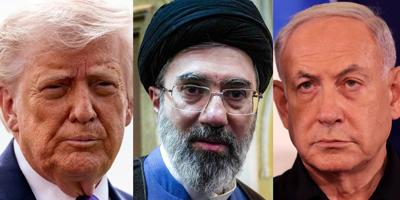
It’s déjà vu all over again. Two months ago, Israel and the United States began a full-scale military conflict with Iran. Now, after stoic and discreet preparations, the Iranians respond with full force. The outcome for their adversaries is so significant that it becomes historic.
In Feb. 2026, in the middle of a serious peace negotiation, Israel and the United States initiated military action against Iran, an operation that may lead to a prolonged conflict, citing a stated justification. Under the war motto, ‘Epic fury,’ Israeli and American forces targeted and killed Khamenei, the Supreme Leader, and several members of the top Iranian leadership.
The attackers have total control of Iranian airspace. As a result, they are employing a scorched-earth bombing campaign that is targeting landmarks and infrastructure, with significant civilian casualties, including school children and factory workers. Despite these sustained bombardments, which achieve tactical success without bringing about the intended political objectives, Iran continues to resist, having anticipated the possibility of another conflict with America and Israel.
With unmatched air superiority, Iran uses powerful drones and missiles to respond to its enemies’ attacks. The Islamic Republic possesses a vast underground arsenal that the IRGC (Iranian Revolutionary Guard Corps) uses to strike Israel, US bases, and US-allied countries in the Middle East. The Iranians are fearless, resilient, and combat-hardened. What shocks the world is that the Islamic Republic has outmaneuvered both Israel and the United States in the 2026 war:
Asymmetric Precision and Cluster Munitions: Iran transitioned from high-volume, less-accurate saturation attacks to using precision, solid-fuel missiles (such as the Kheibar Shekan) and cluster warheads. These munitions were designed to strain terminal air defenses, such as the Arrow 3 and THAAD systems, which faced depletion of high-tier interceptor stocks.
Targeting Infrastructure Over Military Bases: Instead of exclusively attacking fortified military positions, Iran aimed at economic bottlenecks, including the Haifa oil refinery and energy infrastructure in Saudi Arabia and the UAE. This created severe economic volatility and pressured the U.S. and Israel through global market impacts.
Horizontal Escalation” Strategy: Iran widened the battlefield beyond its borders, targeting US and Israeli assets across the region—Qatar, Bahrain, Kuwait, Jordan, and the UAE. By attacking multiple sites simultaneously, they forced a dissipation of US-Israeli defense assets.
Exploiting Underground Hardened Sites: Despite initial strikes aimed at destroying Iran’s missile production and launchers, Iran maintained a retaliatory capability by launching missiles from hardened, underground “missile cities” that were not neutralized in the opening salvos.
Unlike Pearl Harbor in 1941, where Japanese forces were the attackers, and September 11, where terrorists attacked the United States, this time, the roles appear reversed. Some observers view the United States as the aggressor and Iran as the victim, citing claims that Iran did not pose a threat to either America or Israel. This raises the question: why did those two countries attack Iran twice in less than a year? Their stated objective is regime change and the elimination of Iran’s nuclear program, which Donald Trump, Pete Hegseth, and Marco Rubio previously claimed had been destroyed during the 12-day conflict with Iran last year.
The Iranian war is unfolding in a manner similar to the Vietnam War. Despite ongoing bombardments and attacks on the Iranian leadership, the country remains steadfast. Iranian officials reject all of Trump’s cease-fire requests, viewing negotiations as attempts by Israel and America to regroup and rearm. Trump and Netanyahu believed they could bring Iran to submission. In war, one should never underestimate an opponent. The USA and Israel inflict damage on Iran, while Iran retaliates in Israel, on US bases, and throughout the Middle East. The battlefield remains open, and the conflict continues without a clear victor.
The war is unpopular, and its repercussions are affecting the global market economy. As the war intensifies, prices of oil, gas, and fertilizer continue to rise, creating widespread economic effects. The United States faces a 39 trillion-dollar debt, and the ongoing conflict costs the country over 1 billion dollars daily. The American public, NATO (North Atlantic Treaty Organization), and other US allies are signaling an increasing distance from the conflict. Trump faces a challenging situation. Although he entered the war for a brief period, he is under mounting public pressure to withdraw. The Iranians, meanwhile, maintain leverage and remain committed to continuing the conflict until their stated demands are addressed.
The closure of all US bases in the Gulf.
Guarantees of no further attacks.
End of Israeli strike on Hezbollah.
Lifting of all sanctions on Iran
War damage reparations.
No restrictions on Iran’s missile program.
A new order for the Strait of Hormuz that would allow Iran to collect fees from ships that transit the waterway, as Egypt does with the Suez Canal.
Iran has not become a replica of Venezuela. Despite tactical disadvantages, the Iranians have challenged their powerful adversaries and outsmarted them by achieving political gains. Now, the Iranians face a choice: to reveal their nuclear capability—if it exists—or to seek one, not to foster proliferation, but as a measure for deterrence, peace, and respect, similar to North Korea’s approach.
Source: Britannica
 Hubert Odias